* Back To Eden
 by Jethro Kloss by Jethro Kloss
The classic guide to herbal medicine,
natural foods and home remedies
 * Builders of the Dawn: Community Lifestyle in a Changing World * Builders of the Dawn: Community Lifestyle in a Changing World
by Corinne McLaughlin, Gordon Davidson
One of the best guides about how to create intentional community, drawing on the experience of many projects around the world
 * Back from the Land: How Young Americans Went to Nature in the 1970s, and Why They Came Back * Back from the Land: How Young Americans Went to Nature in the 1970s, and Why They Came Back
More than a million would-be homesteaders abandoned soulless cities and tried to make a go of it on small acreages during the 1970s, according to Jeff Jacobs in New Pioneers. They chopped wood and carried water, raised goats and kids. It was usually good at first, as their lungs filled with fresh country air, but before long the backbreaking drudgery took its toll. One by one, Morningstar, Drop City, and Middlearth were shuttered. One by one, the homesteaders returned to the professional lives for which their middle-class upbringings had prepared them.
Eleanor Agnew, who now teaches at Georgia Southern University, lived this story, homesteading 62 acres in Troy, Maine, with her husband and kids. She understands these well-meaning people, and never patronizes them—even when they’re trying to force frozen clothes through an old-fashioned wringer washer.
Her own charmingly told story weaves in and out of many others, following a similar trajectory that led eventually to saying goodbye to all of that. “It gets kind of old to be poor when you have kids,” comments Pam Read Hanna, just one of many vivid characters. For Jim Carlson, the last straw was seeing his pickup truck frozen solidly in the rural Arkansas ground. “I’m just tired of everythingbeing a big job,” he sighed. Now, like Agnew, he teaches college in Georgia. ~ Jim Motavalli
 * Countercultural Communes: A Sociological Perspective (Contributions in Sociology) by Gilbert Zicklin; Greenwood Press, 1983 * Countercultural Communes: A Sociological Perspective (Contributions in Sociology) by Gilbert Zicklin; Greenwood Press, 1983
The sample of twenty-odd communes including the group of five that are explored in some depth obviously cannot stand for the thousands or so communes that were estimated to have existed during the sixties and early seventies. In the group two communes, Satna and Total Loss Farm, had each lasted for several years, which seems intuitively to be a larger proportion of enduring communes than exists for the communal population as a whole.
 * Creating a Life Together: Practical Tools to Grow Ecovillages and Intentional Communities by Diana Leafe Christian ~ first nail, they must buy this essential book: it will improve their chances for success immensely, and will certainly save them money, time, and heartbreak. In her friendly but firm (and occasionally funny) way, Diana Christian proffers an astonishing wealth of practical information and sensible, field-tested advice.”— Ernest Callenbach, author, Ecotopia and Ecotopia Emerging * Creating a Life Together: Practical Tools to Grow Ecovillages and Intentional Communities by Diana Leafe Christian ~ first nail, they must buy this essential book: it will improve their chances for success immensely, and will certainly save them money, time, and heartbreak. In her friendly but firm (and occasionally funny) way, Diana Christian proffers an astonishing wealth of practical information and sensible, field-tested advice.”— Ernest Callenbach, author, Ecotopia and Ecotopia Emerging
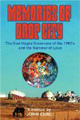 * Memories of Drop City: The first hippie commune of the 1960's and the Summer of Love by John Curl * Memories of Drop City: The first hippie commune of the 1960's and the Summer of Love by John Curl
John Curl lived in the underground communities that shaped the emerging counterculture in New York, the Bay Area, and the Southwest in the 1960s.
Author of eight volumes of poetry, including Scorched Birth and Columbus in the Bay of Pigs, a history of cooperation, Worker Cooperatives or Wage Slavery, and translations of classical Native American poetry, Ancient American Poets, he is a custom woodworker and community activist in Berkeley.
reviews: "With this compelling evocation and portrayal of breathing people, John Curl unpacks the boxed lunch myth of America's alternative lifestyle Sixties, and restores the day to day flavor of a deeply fabled era still key to understanding the way we live (and don't live) now."
...Al Young, poet laureate of California
'Memories of Drop City is an extraordinary book which brings the Sixties back to life in vivid detail and conveys the spirit of the Sixties better than almost anything else I've read.
...Gerald Nicosia, author of Memory Babe
"Memories of Drop City brings vibrantly to light the flower children who returned to the land seeking peace and by that act were committing revolution. John Curl captures the idealism of a generation and their demonstrations against war in a revolution with a smile.."
...Floyd Salas, author of Tattoo the Wicked Cross
 * Lost and Found: My Life in a Group Marriage Commune (CounterCulture series) by Margaret Hollenbach * Lost and Found: My Life in a Group Marriage Commune (CounterCulture series) by Margaret Hollenbach
"In "Lost and Found," critical intelligence and vivid story-telling achieve a fine balance. With disarming honesty and grace, Hollenbach not only charts a personal journey toward self-acceptance, but also re-creates the gritty, complex reality behind the 60s generation, whose search for transformation turned the American dream inside out."--Molly Best Tinsley, author of "Throwing Knives"(winner, Oregon Book Award, 2001)

* Huerfano: A Memoir of Life in the Counterculture
by Roberta Price
At once comic, poignant, and above all honest, "Huerfano" recaptures the sense of affirmation and experimentation that fueled the counterculture without lapsing into nostalgic sentimentality on the one hand or cynicism on the other.
 * The Good Life: Helen and Scott Nearing's Sixty Years of Self-Sufficient Living * The Good Life: Helen and Scott Nearing's Sixty Years of Self-Sufficient Living
In 1932, as he approached 50, Scott Nearing abandoned the city for country living. He and Helen Nearing inspired thousands of visitors to their Forest Farm in Vermont and Maine. That inspiration continued through their books and
the Good Life Center, which still hosts events and welcomes visitors. The Nearings stimulated a back-to-the-land movement that they embodied for 50 years, until Scott's death at the age of 100 in l983.
"Do the best that you can, wherever you are, and be kind."~ Scott Nearing
Oviously The Good Life worked for him and his wife.
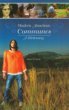 * Modern American Communes: A Dictionary * Modern American Communes: A Dictionary
by Robert P. Sutton
This reference source contains biographies and historical overviews of 20th-century communes and utopias in the United States and those individuals involved with them. Sutton provides a comprehensive history of both religious and secular utopian communities. Entries include Amity Colony, Farm Eco-Village, Holy City, David Koresh, Shaker Communities, The Farm, and Donald Walters, among many others.
 * No Heavenly Delusion?: A Comparative Study of Three Communal Movements (Liverpool University Press - Liverpool Science Fiction Texts & Studies) by Michael Tyldesley, Senior Lecturer at the Manchester Metropolitan University * No Heavenly Delusion?: A Comparative Study of Three Communal Movements (Liverpool University Press - Liverpool Science Fiction Texts & Studies) by Michael Tyldesley, Senior Lecturer at the Manchester Metropolitan University
This is a well written informative book about the intellectual and practical differences between three early communes that started in pre-war Germany. It chronicles the differences between their philosophy as well as how they changed over the years due to individual intellectual processes and the historical processes of their times. All three movements live what could be termed a ‘common life’. However, they do not live the same type of common life.
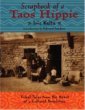 * Scrapbook of a Taos Hippie : * Scrapbook of a Taos Hippie :
Tribal Tales from the Heart of a Cultural Revolution
by Iris Keltz, Ed Sanders (Introduction)
The '60s--the music, the clothes, the political and sexual idealism, the experimentation
with drugs, the hunger for peace, creativity, and sharing--were a watershed
in the way America sees itself. Hippie culture was at the very zenith of that
watershed, and Taos was its beating heart, a Mecca that beckonedyoung pilgrims
from all over the country. Iris Keltz was one of those pilgrims who came to
Taos in the '60s. She stayed to become a folk historian of the tribe.

* Free Land, Free Love: Tales of a Wilderness Commune
by Don Monkerud, Susan Keese, Malcolm Terence (Editors) The power of Free Land, Free Love is in the very personal voices, weaving
a portrait of experiences in communal living at Black Bear Ranch.
Out of Print. Available Used & new
 * Cows Are Freaky When They Look at You: An Oral History of the Kaw Valley Hemp Pickers * Cows Are Freaky When They Look at You: An Oral History of the Kaw Valley Hemp Pickers
by David Ohle, Roger Martin, Brosseau (Editor)
The seeds of this book were planted in the late '80s, when Lawrence, Kansas-based author David Ohle began compiling oral tales of local counterculture. The other member of the Lawrence literati, William Burroughs, penned the book's foreword. Out of print. Available used & new available
|
 * The Survival of a Counterculture: Ideological Work and Everyday Life Among Rural Communards * The Survival of a Counterculture: Ideological Work and Everyday Life Among Rural Communards
by Bennett M. Berger University of California Press, 1981
The Ranch occupies 140 acres of meadow, orchard, and canyoned forest of redwood, fir, pine, alder, laurel, and madrone, somewhere in rural California. The land was bought in the 1960s by two affluent dropouts, wealthy enough to afford the $50,000 price. Along with some friends and acquaintances, they moved in and attempted to make a commune. That was in 1968, when the streets of San Francisco's Haight-Ashbury had begun to turn mean, and the counterculture was already beginning to go desperate, violent, apocalyptic. Twelve years later The Ranch is still there, surviving, a very long time by the standards of post-hippie communes without formal religious organization. Most informed guesses by students of communes estimate the modal duration of "hippie" communes (i.e., those without formal creeds or religions or reliable sources of stable income) as from one to two years.The Ranch is not the kind of commune that is easily accessible or open to anyone who wants to crash--as, for example, Morningstar Ranch was, a place whose very openness and accessibility brought it widespread publicity (and disaster). ~ ~ an excerpt from Chapter one.

* The 60's Communes: Hippies and Beyond (Peace and Conflict Resolution) by Timothy Miller
If you've ever lived on a commune or if you're interested in studying intentional
communities from roughly 1967 to 1975, this book is a page turner. .gif)
 * The Communal Experience: Anarchist and Mystical Communities in Twentieth Century America (Phoenix Book)by Laurence R. Veysey * The Communal Experience: Anarchist and Mystical Communities in Twentieth Century America (Phoenix Book)by Laurence R. Veysey
Of the modern schools that were founded in the United States, the longest-lived was the one that started in New York City in 1910. after being shut down, it moved to a newly formed utopian colony of Stelton in New Jersey in 1915, both of which lasted until 1953. This school was involved with numerous other experimental ideas, including modern art, and benefitted from the talents of many well-known people: not just anarchists like Emma Goldman and Alexander Berkman, but many distinguished artists, writers, and thinkers like Will and Ariel Durant, Mike Gold, Robert Henri, Rockwell Kent, Eugene O'Neill, and Margaret Sanger.
 * Dynamic Utopia: Establishing Intentional Communities as a New Social Movement * Dynamic Utopia: Establishing Intentional Communities as a New Social Movement
by Robert C. Schehr, Assistant Professor of Sociology at the University of Illinois at Springfield.
In America, two predominant paradigms constitute much of contemporary theoretical analyses of social movements, although variations permeate each. They either stress the instability constitutive of collective behavior and the subsequent collapse of consensus, or they prioritize the mobilization of organizational, symbolic, and capital resources in the struggle for state-based political representation and acknowledgment. Neither, I will argue,is able to effectively elucidate the complex interrelation between contemporary movement actors seeking wholistic transformations in their relationship to each other, society, the environment, and themselves. Unlike their American colleagues, European authors, particularly those writing in the aftermath of the "May Movement" in France, and similar student and worker uprisings in Germany and Italy during the middle and late 1960s, did seek articulation of social movement organizations and actors that contextualized movement activities as a component of postindustrial transformations largely characteristic of Western industrialized nations. According to authors rendering evaluations of these new social movements ( NSM), structural malaise had produced a crisis in meaning for an entire generation of young people who, in rejecting the value structures of their parents, openly repudiated what they perceived to be the alienating components of capitalist production and consumption. Writers addressing NSMs have established a sophisticated and lucid alternative to American social move-ment theory.
~ an excerpt from the Introduction to the book.
 * Living on the Earth: Celebrations, Storm Warnings, Formulas, Recipes, Rumors, and Country Dances Harvested by Alicia Bay Laurel. * Living on the Earth: Celebrations, Storm Warnings, Formulas, Recipes, Rumors, and Country Dances Harvested by Alicia Bay Laurel.
This book retains the innocence, lyricism and whimsy of the original, enriched with current information on sustainable technology and protection of the environment. At once a practical manual of recipes and directions for creating from scratch all of life's basic amenities and some of its frivolities, an influential artist book with an instantly identifiable style, an insider's view of the Utopian commune movement of the early seventies, and a spiritually uplifting lifestyle book, Living On The Earth continues as a beloved addition to our bookshelves.
 * The Simple Life: Plain Living and High Thinking in American Culture Oxford University Press (1985) * The Simple Life: Plain Living and High Thinking in American Culture Oxford University Press (1985)
by David E. Shi (Author)
An historical overview of the practice of voluntary simplicity in America – with detailed exploration of important spiritual and community dimensions in this practice.

* Sleeping Where I Fall: A Chronicle by Peter Coyote
Movie actor Coyote's gritty and unsentimental memoir of the West Coast counterculture
during the '60s and '70s
In this book he relives his fifteen-year ride through the heart of the counterculture
- a journey that took him as the son of an East Coast stockbroker to the
riotous life of political street theater and the self-imposed poverty of
West Coast communal movements.
 * Towns of the Sandia Mountains (NM) (Images of America) Arcadia Publishing (Oct. 30, 2006) by Mike Smith * Towns of the Sandia Mountains (NM) (Images of America) Arcadia Publishing (Oct. 30, 2006) by Mike Smith
Mike Smith dove into the mountains' history when he was a curious 11.
When he was a 26-year-old man who had quit college to focus on writing, making his living as a freelance editor and at a skatepark called Exerplay in the East Mountains, he decided it waas theright time to get to work on this project about the history.In his six months on the project, Smith collected about 200 photographs from the late 1800s to around 1960 for this book about the area's rich history.
"This place has a history that's so worth telling," Smith said. "We've got multiple cultures, and they've all got amazing stories."
Sandia means watermelon in Spanish, and is popularly believed to be a reference to the red color of these mountains at sunset. The ancient people who lived there considered the mountains a sacred place. Many still do.
 * Turtle Island (New Directions Books) by Gary Synder - The title comes from a Native American term for the continent of North America. These Pulitzer Prize (1975)-winning poems and essays all share a common vision: a rediscovery of North America and the ways by which we might become true natives of the land for the first time, to reclaim the organic and holistic environmental harmony that once held sway here. His poetic articulation of that vision is still very meaningful to us. * Turtle Island (New Directions Books) by Gary Synder - The title comes from a Native American term for the continent of North America. These Pulitzer Prize (1975)-winning poems and essays all share a common vision: a rediscovery of North America and the ways by which we might become true natives of the land for the first time, to reclaim the organic and holistic environmental harmony that once held sway here. His poetic articulation of that vision is still very meaningful to us.
 * Shelter by Lloyd Kahn, Bob Easton * Shelter by Lloyd Kahn, Bob Easton
First publihed in 1973, I remember seeing it a friends house and being enchanted by the creativity exhibited by the different cultures aroung the world. I was very happy when I say it was is available again so I could get my own copy. With over 1000 photos and illustrations and all the interesting information it contains, this book is a real value.
* Voices from the Farm: Adventures in Community Living
Q: Why do it?
A: Since we first came here, we've had the satisfaction of realizing many of the dreams and aspirations with which we began. After more than two decades on this land, we appreciate even more the security of a tight - knit, compassionate, community environment. Our children have the freedom to explore the woods or go anywhere in our town in safety. The adults they interact with are honest and caring. We have very nurturing and healthful surroundings. No one has to carry the burden of his or her problems alone, or to bear the entire brunt of some catastrophe. ~ Stephen Gaskin
 * Leaving New Buffalo Commune (Counterculture Series) by Arthur Kopecky and Timothy Miller (2006) * Leaving New Buffalo Commune (Counterculture Series) by Arthur Kopecky and Timothy Miller (2006)
* New Buffalo: Journals from a Taos Commune (Counterculture Series)
by Arthur Kopecky and Peter Coyote
(Mar 15, 2004)

* The Seed of Love: Chronicles of a Hippie Commune in Mexico, and the Lives of It's People During Tumultuous Times 1968-1970 by Reed Camacho Kinney
Author Kinney was a young man during the late sixties/early seventies.
Within the pages of this well-written book are his memories of living with
Mexican hippies on a commune called Chestnuts. It is an engaging books that
tells about the challenges as well as the many pleasures they shared living
the dream of communal life in the mountains of Veracruz, Mexico.
Available in paperback or as an Electronic Book from the publisher link above
where you will also find a chapter preview.
|
 * The Caravan
  *
*  *
*  *
*  *
*